
Improving Plastic Depolymerization Research with a Split-Barrel Extruder and Recirculation Channel
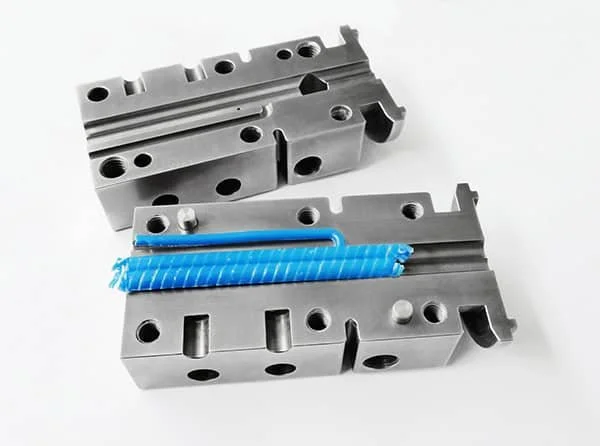
In research and development environments, flexibility and control are essential. When working with complex plastic materials, especially in depolymerization studies, researchers often need more than a standard extrusion process. Materials may require extended mixing, repeated processing, or additional time under controlled conditions before they reach the desired level of homogenization.
A split-barrel twin-screw extruder with an integrated recirculation channel provides an effective solution for these challenges. Unlike a conventional extrusion setup, where material passes through the barrel and exits immediately through the nozzle, this system allows material to be redirected back into the screw channel after the initial extrusion process. This means the same material can be processed multiple times without needing to be manually collected and reintroduced.
This recirculation function is especially valuable when working with materials that are difficult to melt, blend, or chemically process. In plastic depolymerization research, achieving a consistent melt and uniform material distribution can be critical to producing reliable results. By allowing repeated processing within the same system, the recirculation channel improves homogenization and gives researchers greater control over the final material properties.
Once the desired level of processing has been reached, the operator can switch the system from recirculation mode to standard extrusion mode. The material is then extruded through a replaceable nozzle opening. This simple transition makes the system highly practical for laboratory workflows, where researchers may need to test different processing times, material compositions, or extrusion conditions.
Another advantage of this design is that the barrel can still be operated like a standard extruder when recirculation is not needed. In some systems, complex outlet geometries or switch valves can interfere with normal extrusion performance. This solution avoids that issue by allowing standard extrusion through a normal nozzle configuration. As a result, the system maintains strong extrudability, easier cleaning, and fewer process limitations.
The split-barrel design also supports easier access for maintenance, inspection, and cleaning. For research teams working with experimental plastics, additives, or depolymerization products, this can significantly reduce downtime between trials. The ability to open and clean the barrel efficiently is particularly useful when switching between materials or conducting small-batch experiments.
Overall, this extruder design combines the benefits of compact twin-screw extrusion with the added flexibility of controlled recirculation. It is well suited for laboratories and development teams working on plastic depolymerization, advanced material processing, and difficult-to-mix formulations. By allowing repeated processing, improved homogenization, and straightforward final extrusion, the system helps simplify complex experimental workflows while expanding the range of possible applications.